Diving in Finland – Everything You Need to Know
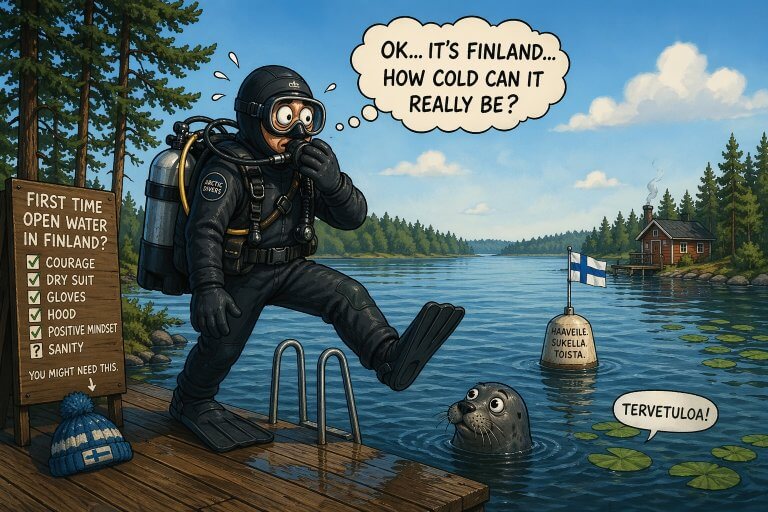
Finland is not the first country that comes to mind when people think about scuba diving. And yet, it offers some of the most unique diving experiences in Europe, from perfectly preserved Baltic Sea wrecks to surreal ice diving beneath frozen seas. While not a tropical destination, scuba diving in Finland attracts divers looking for something truly different.
Eerie Baltic shipwrecks preserved for centuries. The surreal silence beneath a frozen sea. Freshwater lakes with visibility that genuinely surprises. This guide covers everything you need to know about diving in Finland — from the best dive sites to when to go and how to get started.
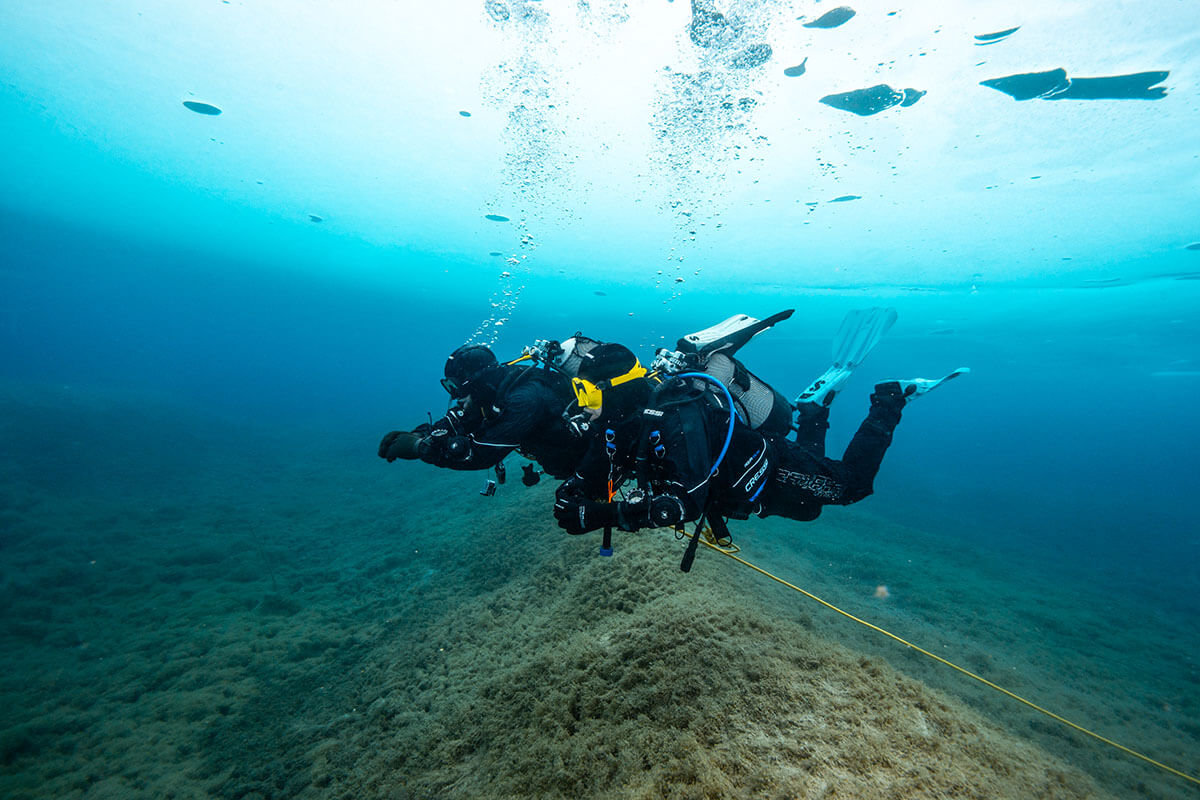
Diving in Finnish waters — a world away from the tropics, but rewarding in its own right.
Who Is Diving in Finland Best For?
Cold water diving has a reputation for being uncomfortable and unforgiving. In reality, diving in Finland is as safe and accessible as anywhere else — as long as you have the right training and equipment. And the rewards are considerable.
Diving in Finland is not about colourful reefs — it appeals to a different type of diver. It is especially suited for:
- Wreck divers looking for well-preserved historical sites
- Adventure seekers interested in ice diving and extreme conditions
- Divers wanting something different from crowded tropical destinations
- Local and European divers looking for high-quality training and regular diving opportunities
For those willing to embrace the conditions, Finland offers a uniquely rewarding underwater experience.
Curious to try diving in Finland?
- Start with a Discover Scuba Diving experience in Helsinki or join a guided dive with our team.
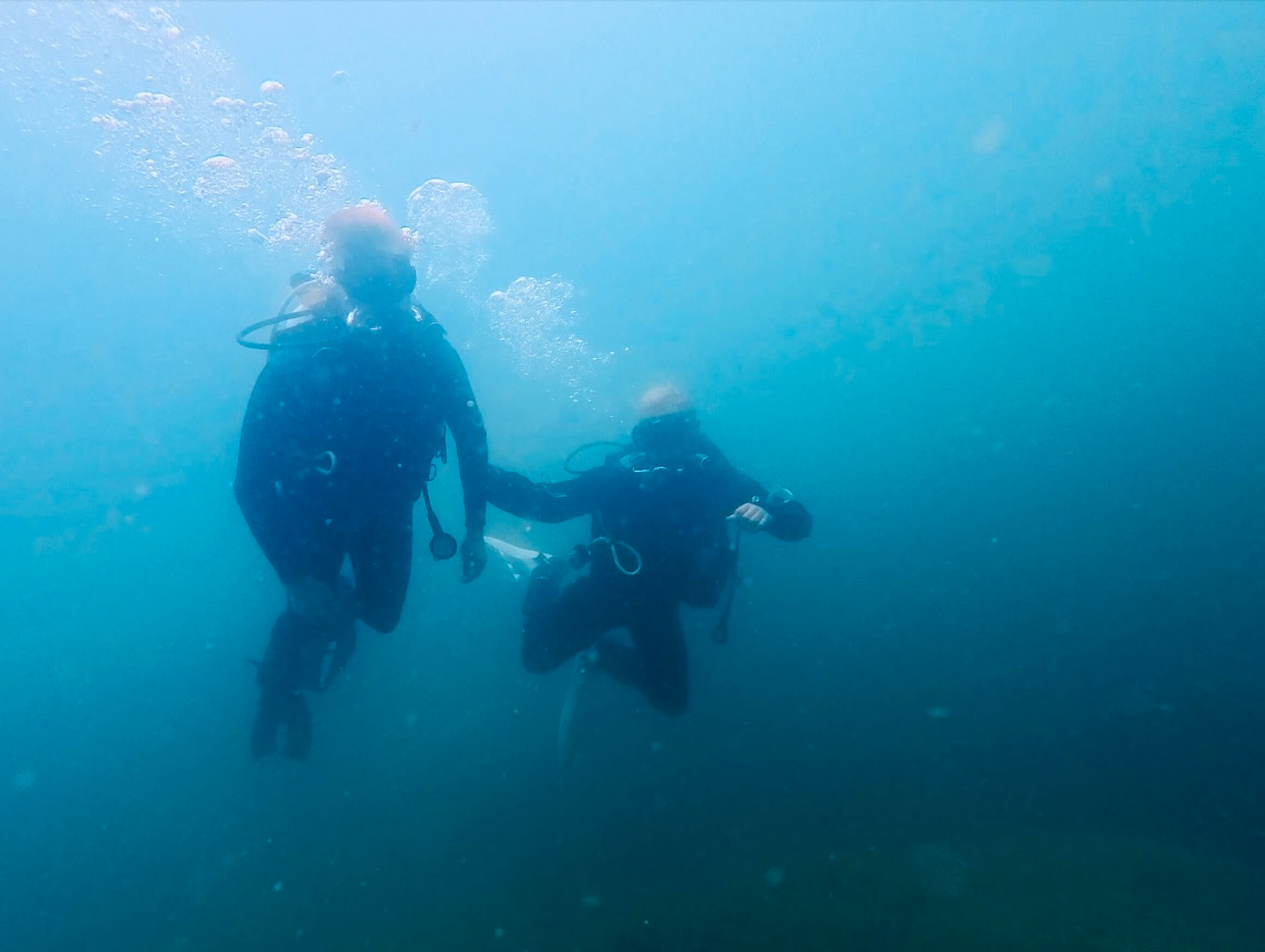
Diving at Hila, Kirkkonummi — Arctic Divers’ home base for open water diving.
Ice diving beneath a frozen sea is an experience available in very few places in the world. Finland, with its long winter season and reliable ice formation, is one of the best destinations for this extraordinary activity. As the name suggests, Arctic Divers is specialized in the harsh winter conditions and ice diving trips.
The Best Dive Sites in Finland
Here is a quick overview before we go into detail:
| Site | Type | Best for | Visibility |
|---|---|---|---|
| Iso-Melkutin, Loppi | Deep lake | All levels | ★★★★ Good |
| Bay of Helsinki | Wrecks | Intermediate+ | ★★ Moderate |
| Hila, Kirkkonummi | Rocky quarry | All levels | ★★★★ Good |
| Pikkala | Shallow lake | Beginners | ★★ Moderate |
| Hanko | Wrecks | Intermediate+ | ★★ Moderate |
| Rummu, Estonia | Prison ruins | All levels | ★★★★★ Excellent |
Iso-Melkutin, Loppi
Located in Loppi, Iso-Melkutin is one of Finland’s most rewarding freshwater dive sites and a firm favourite among ADDC divers. The lake reaches depths of up to 27 metres, with rope lines guiding divers along the shallower 5–10 metre levels and descending all the way down past 20 metres for more experienced divers. Unlike most Baltic coastal sites, Iso-Melkutin offers notably better visibility — the kind of clear water that reminds you why you took up diving in the first place. Well worth the trip out of Helsinki.
Bay of Helsinki — Wreck Diving
The waters around Helsinki harbour some of the Baltic’s most impressive wreck diving, with several historical shipwrecks lying at depths of 20–30 metres. The standout site is the Kronprins Gustav Adolf — a Swedish warship sunk in 1788 and now Finland’s first underwater wreck park, opened in 2000. Lying at 19–21 metres, the wreck is remarkably intact, with cannons, anchors, cannonballs and original timber all still visible. A guided rope path leads divers around the site with information plaques at key points. The cold, brackish water has kept it in extraordinary condition — a window into 18th century naval life that stays with you long after you surface.
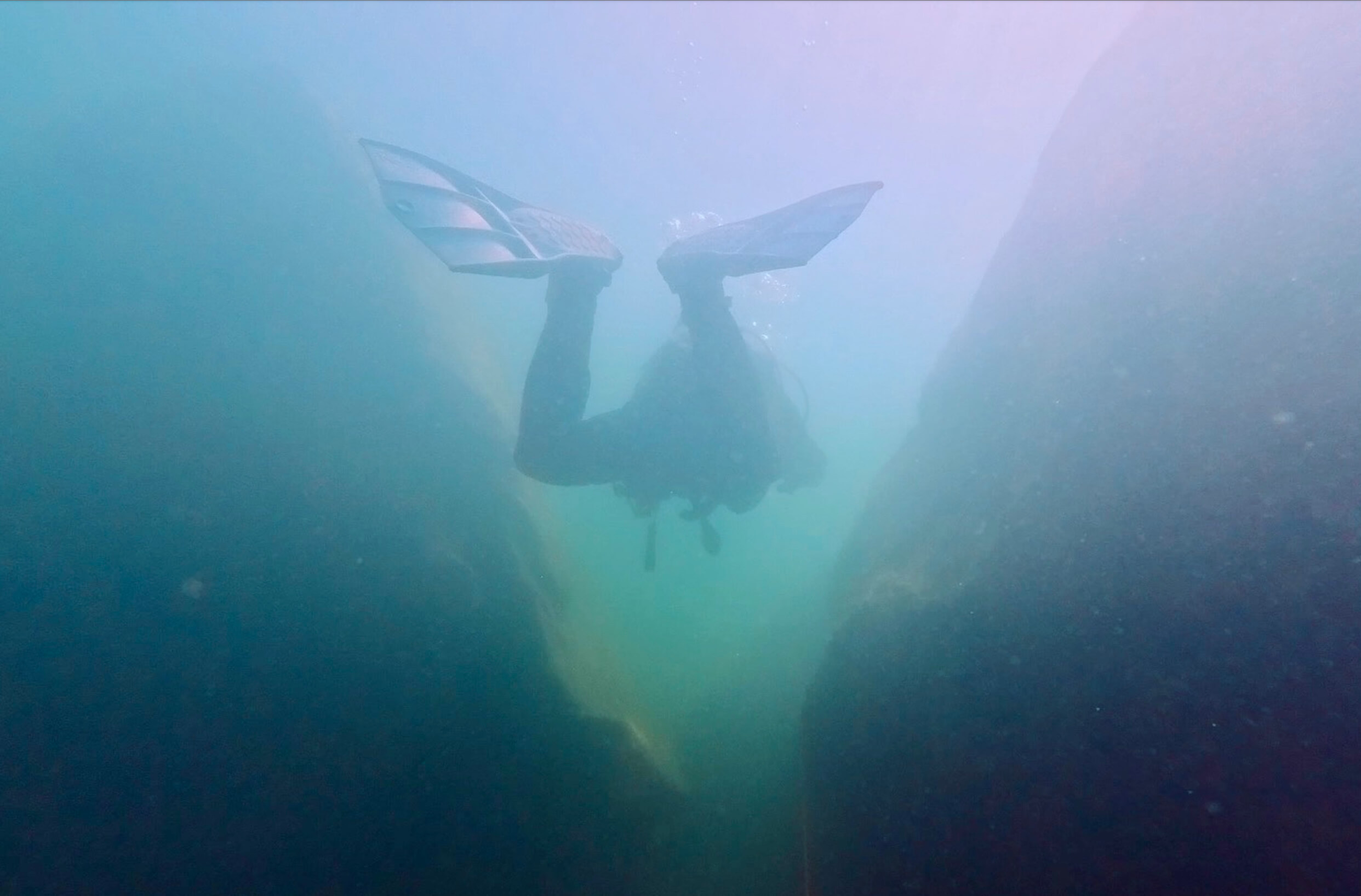
A diver explores the underwater world in a Finnish quarry.
Hila, Kirkkonummi
Hila in Kirkkonummi, about 40 kilometres west of Helsinki, is Arctic Divers’ home base for open water diving. The quarry features distinct rock levels at 5 metres and 10 metres, making it ideal for structured skills practice and progressive depth training. ADDC operates here several times a week throughout summer and has its own on-site storage and equipment. The site also features a fun underwater rope track — great for navigation practice and adding a bit of adventure to any dive. Visibility here is consistently among the best in the greater Helsinki area.
Pikkala
Pikkala is a shallow lake site in the greater Helsinki region, with depths mostly around 5 metres and a maximum of just 7 metres — making it one of the most accessible dive sites in Finland. Visibility follows a dramatic seasonal arc: crystal clear in spring, it deteriorates through summer as the water warms, becoming notably murky in July and August. Surface temperatures here can be surprisingly warm — in August 2025 the surface reached 27°C, exceptional by Finnish standards. The beach attracts plenty of swimmers in summer, giving it a lively atmosphere above water. Arctic Divers uses Pikkala regularly for Rescue Diver courses and skills training, where the shallow, controlled environment is ideal for practising emergency scenarios.
Hanko
At the southernmost tip of Finland, Hanko is one of the country’s most historically significant dive destinations. The area is known for its deep sloping rock formations and wrecks that extend beyond 30 metres — territory for experienced divers with the right equipment and training. Arctic Divers organises summer boat trips to Hanko for both fun diving and deep scenario training, making it a highlight of the ADDC annual calendar. The waters are rich in shipwrecks, the result of centuries of maritime traffic through this strategically important stretch of water.
Rummu, Estonia
While technically across the border in Estonia, Rummu quarry is firmly on the radar of every Finnish diver. The partially flooded limestone quarry contains the ruins of a Soviet-era prison and industrial complex, creating an otherworldly underwater landscape unlike anything else in the region — and the visibility is exceptional by Nordic standards. Arctic Divers organises a yearly group trip to Rummu, and with more destinations being added to the ADDC travel calendar, it is a great way to experience something truly different with your dive community.
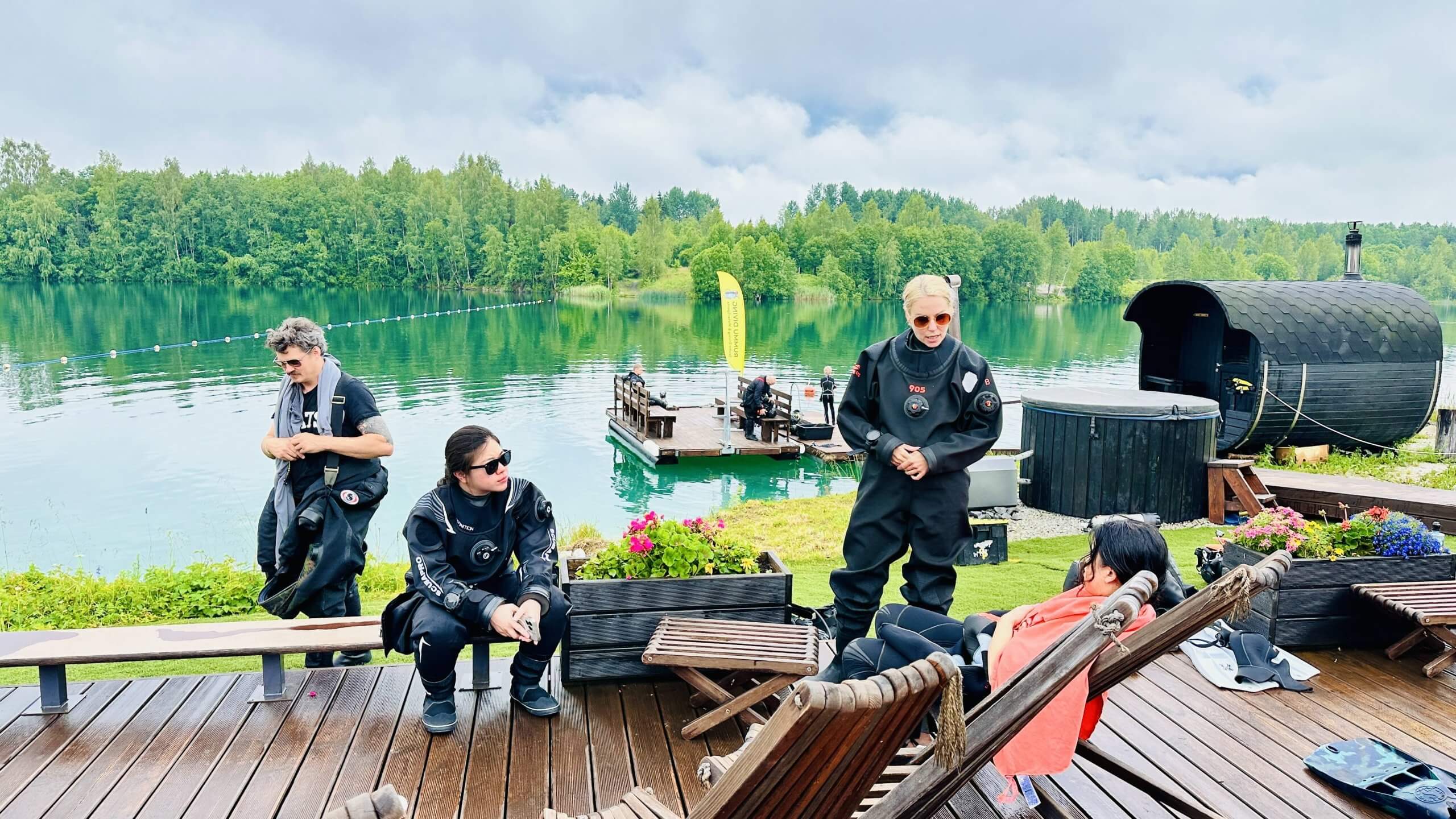
Arctic Divers summer trip to Rummu quarry known for its submerged prison ruins.
Ice Diving in Finland — A World-Class Experience
If there is one thing that sets Finland apart as a dive destination, it is ice diving. Every winter, when the sea and lakes freeze, Arctic Divers Dive Center organises ice diving trips around Southern Finland that attract divers from across the country and abroad.
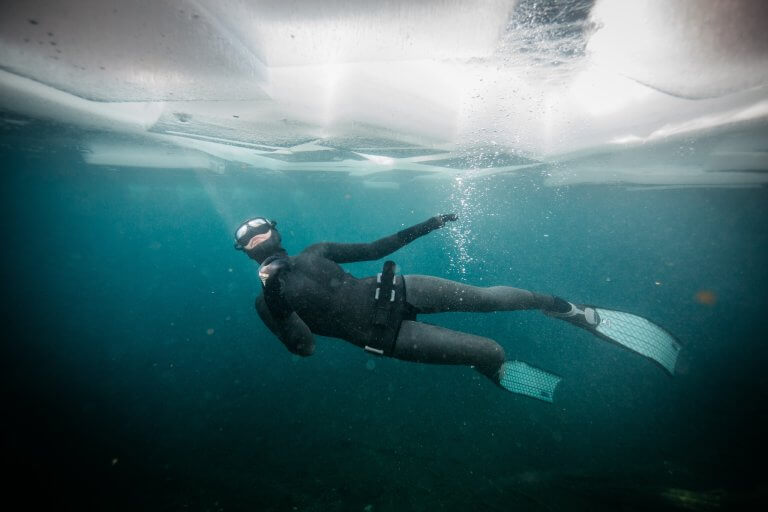
Diving under ice sounds extreme. In practice, it is one of the most serene experiences in diving. Below the ice, the world is completely silent. Light filters through the frozen surface in pale blue columns. It is cold water diving at its most dramatic — and its most beautiful.
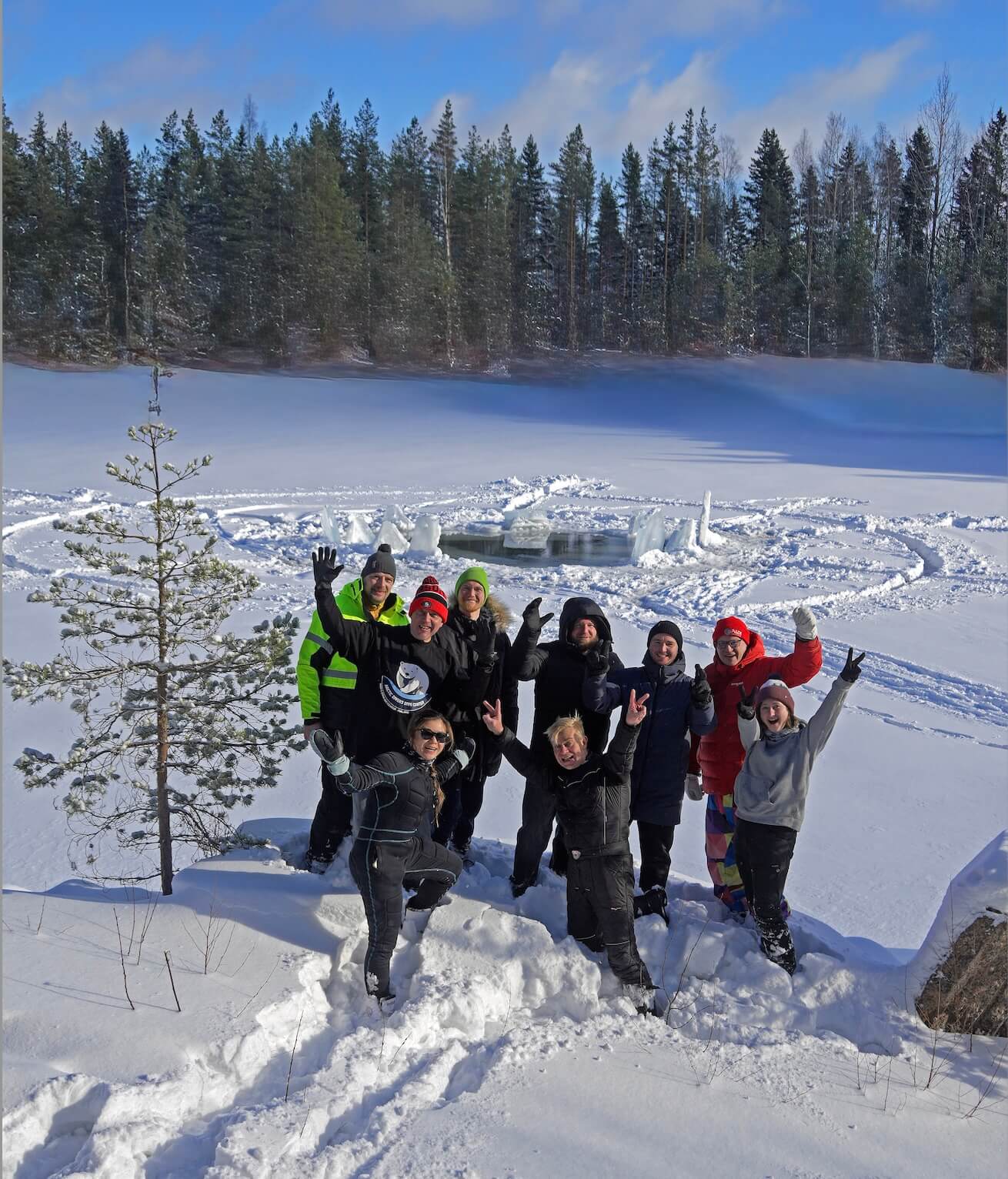
Ice diving day in Finland with Arctic Divers – unique experiences and happy divers.
Ice diving requires specific training and is always conducted with a dedicated safety team on the surface. For those who have completed the required dive courses and have solid basic diving skills, it is an achievable and unforgettable experience.
What to expect on an ice dive:
- A hole cut through the ice — typically 1–1.5 metres wide
- A full briefing on hand signals and emergency procedures before you enter
- A safety line attached to your harness at all times
- A surface safety team monitoring you throughout
- Full dry suit and undersuit available to rent from ADDC — no specialist gear needed
- Water temperature around 0–2°C — cold but manageable in a dry suit
- Visibility often at its clearest of the entire year
- Groups kept small — this is not a mass-market activity
- A pale blue, completely silent world unlike anything you have experienced underwater
- A traditional Finnish sauna waiting for you afterwards
The ice diving season typically runs January through March. Places fill quickly — book well in advance.
Best Time for Diving in Finland
Diving in Finland is possible year-round, but each season offers a very different experience.
| Season | Months | Water Temp | Visibility | Best for |
|---|---|---|---|---|
| Winter | Dec – Mar | 0–2°C | Relative best | Ice diving |
| Spring | Apr – May | 2–10°C | Good | Wreck diving |
| Summer | Jun – Aug | 18–25°C surface | Worst (algae) | Beginners, DSD |
| Autumn | Sep – Nov | Cooling | Improving | Experienced divers |
Tip: If visibility matters to you, spring and winter offer the clearest conditions — and the most dramatic experiences.
Summer Diving in Finland — Boat Dives, Shore Dives and Courses
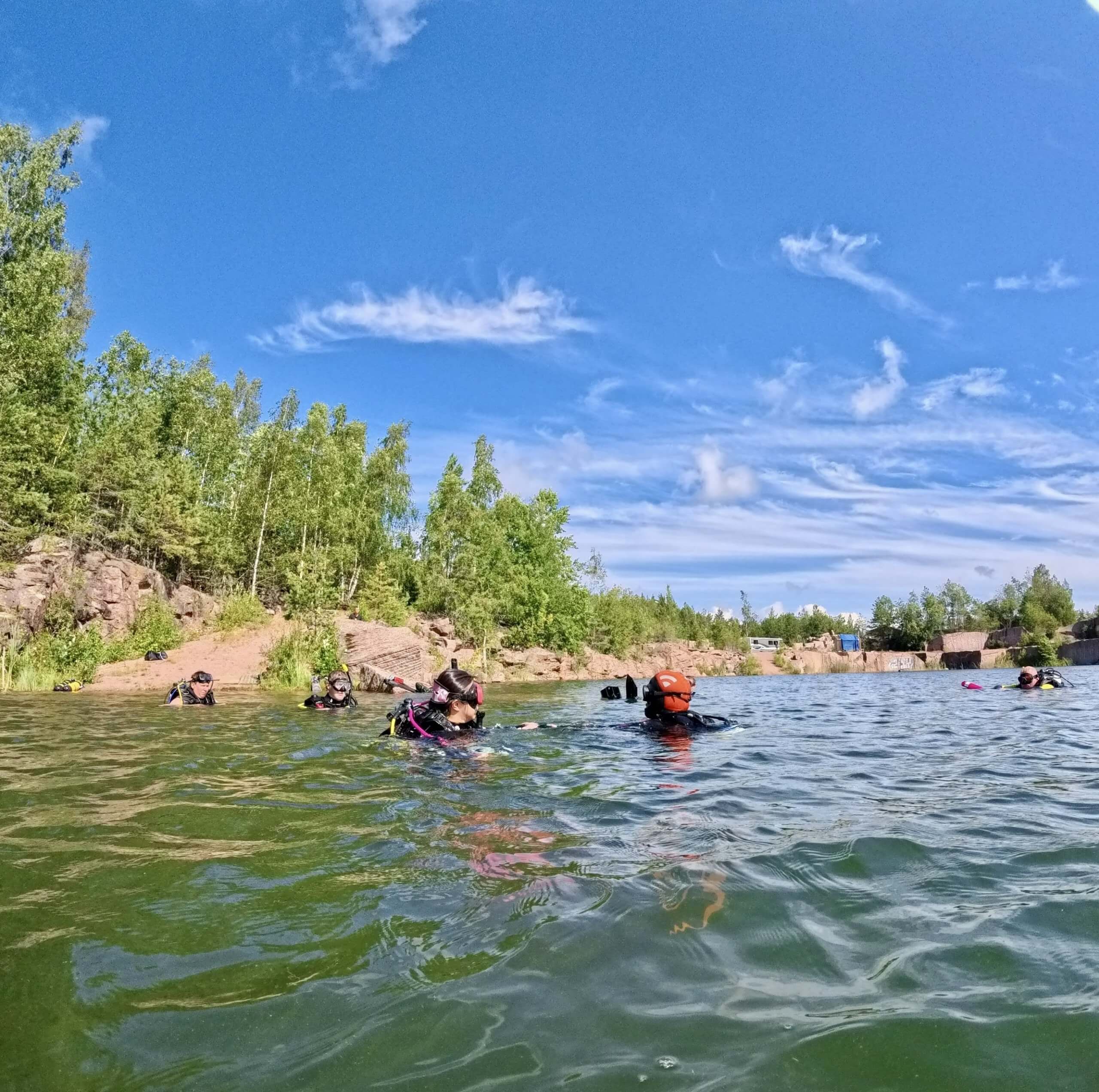
Summer open water diving in Finland — long days, warm surface water and beautiful rocky Finnish coastline.
Summer is the most social and varied time of year at Arctic Divers. Long days, warm surface temperatures and a packed programme of dives, courses and events make Helsinki a genuinely great base for diving from June through August. Here is what to expect:
- Weekly dives at Hila and Iso-Melkutin — guided dives every week at our two favourite sites. Hila quarry in Kirkkonummi offers clear water, rock levels at 5 and 10 metres and our own underwater rope track. Iso-Melkutin in Loppi reaches 27 metres with exceptional freshwater visibility.
- Boat dives to the Helsinki wreck park — shore dives departing directly from Lauttasaari or other convenient docks in Helsinki out to famous wrecks like the Gustav Adolf, a Swedish warship sunk in 1788 and one of the most atmospheric wreck dives in the Baltic.
- Day trips to Hanko and Porkkala — regular summer boat trips to one of Finland’s most historic dive destinations, combining fun diving with deep scenario training on sloping rocks and wrecks beyond 30 metres.
- Fun events and gatherings — informal get-togethers and special events throughout the season, including a try freediving event with Finnish world record holder Johanna Nordblad at the end of June.
- Full course programme — PADI Open Water Diver, Advanced Open Water Diver, Rescue Diver and Divemaster training all run continuously with no fixed start dates. Begin when you are ready.
- International dive trips — ADDC is planning dive trips abroad later in 2026, destinations to be confirmed. Get in touch early to register your interest.
Planning to dive in Finland this summer?
- Join our weekly dives in Helsinki, explore local wrecks, or take your next PADI course during the most active diving season.
What Equipment Do You Need?
Cold water diving in Finland requires proper equipment. A wetsuit is suitable for summer diving in surface waters, but for year-round diving — and any diving below the thermocline — a dry suit is strongly recommended.
- Dry suit — essential for winter diving and highly recommended year-round
- Thick undersuit — worn beneath the dry suit for thermal protection
- Gloves and hood — neoprene or dry gloves for cold water
- Regulator with cold water configuration — standard regulators can free-flow in near-freezing water
Arctic Divers Dive Center offers full equipment rental including dry suits, so visiting divers do not need to bring their own gear.
Diving Courses in Finland — How to Get Started
Whether you have never dived before or are an experienced diver looking to expand your skills, Finland has excellent training options.
-
Try Diving — Discover Scuba Diving (DSD)
No experience needed. A pool session followed by a shallow open water dive under direct instructor supervision — half a day, no certification required. The fastest way to find out if diving is for you. Book a DSD experience year-round in Helsinki. -
PADI Open Water Diver
The internationally recognised entry-level certification allowing you to dive independently to 18 metres worldwide. Online theory, pool sessions and four open water dives. No fixed start dates — PADI Open Water courses at Arctic Divers start when you are ready. -
PADI Dry Suit Diver
For certified divers wanting to dive year-round in Finland. Theory, a pool session and open water dives in a dry suit — typically 1–2 days. The PADI Dry Suit Diver course is a worthwhile investment for anyone planning to dive in Finnish conditions regularly. -
PADI Ice Diver
For certified divers with dry suit experience. Covers tethered diving techniques, communication signals and safety procedures beneath ice — one day, available seasonally in winter. Prepares you for one of the most extraordinary diving experiences in the world.
Arctic Divers Dive Center is a PADI 5-Star IDC Centre in Lauttasaari, Helsinki, offering courses from beginner to instructor level in Finnish, English and Chinese.
Practical Information for Visiting Divers
ADDC’s headquarters are located in Lauttasaari — one of Helsinki’s most convenient waterfront spots, right at the shore and easily accessible from the city centre. Pop in to meet the team, browse our equipment store, or ask anything about diving in Finland. You are always welcome to come and say hi.
Helsinki is well connected by air from across Europe and beyond. Lauttasaari is accessible by public transport from the city centre in under 30 minutes.
Helsinki offers accommodation at every price point. Staying in Lauttasaari or Ruoholahti puts you close to both the dive centre and the city’s main attractions.
Winter visits can combine ice diving with sauna culture, the northern lights and snow activities. Summer visits offer long daylight hours, island hopping in the Helsinki archipelago and some of the best urban green spaces in Europe.
Frequently Asked Questions
- Can you scuba dive in Finland?
- Yes — Finland has an active diving community and a range of interesting dive sites, from Baltic Sea wrecks to freshwater lakes and unique ice diving experiences in winter. Arctic Divers Dive Center in Helsinki offers courses, guided dives and equipment rental year-round.
- Is diving in Finland suitable for beginners?
- Absolutely. Summer conditions in Southern Finland are ideal for learning to dive — water temperatures reach 18–25°C at the surface and several sites offer sheltered, accessible conditions. Arctic Divers runs Discover Scuba Diving experiences and PADI Open Water courses with no fixed start dates.
- What is the visibility like when diving in Finland?
- Visibility is generally limited on the Baltic coastline — typically 2–5 metres — due to the nutrient-rich nature of these northern waters. However, certain sites like Iso-Melkutin in Loppi, Hila in Kirkkonummi and inland lakes such as Kaatiala offer noticeably better conditions. Winter and spring tend to have the best visibility before algae season begins.
- What is ice diving in Finland like?
- Ice diving in Finland is one of the most serene and memorable experiences in diving. You descend through a hole cut in the frozen sea, tethered to a safety line, with the ice above filtering light into pale blue columns. The experience requires a dry suit and specific ice diver training. Arctic Divers organises ice diving events in Helsinki and around Finland each winter, typically from January through March.
- Do I need a dry suit to dive in Finland?
- A dry suit is strongly recommended for year-round diving in Finland and essential for winter and ice diving. Water temperatures drop to 0–2°C in winter and remain cold at depth year-round. Arctic Divers offers dry suit rental and the PADI Dry Suit Diver course for those looking to get properly equipped for Finnish conditions.
- Where is the best place to learn to dive in Helsinki?
- Arctic Divers Dive Center in Lauttasaari is Helsinki’s leading PADI 5-Star IDC dive centre, offering everything from beginner try dives to professional instructor training. The centre operates year-round and runs courses in Finnish, English and Chinese with no fixed start dates.
Is Diving in Finland Worth it?
Diving in Finland is not like diving anywhere else. It demands a little more preparation, a slightly thicker exposure suit and a willingness to embrace the cold — and yes, sometimes the murky. In return, it offers extraordinary wrecks, standout sites where visibility genuinely surprises you, and the rare experience of descending beneath a frozen sea.
For those willing to venture beyond the tropics, Finland is one of Europe’s most rewarding and underrated dive destinations.
Ready to experience diving in Finland for yourself?
- Whether you are a complete beginner or an experienced diver looking for something genuinely different — we are here to help you get in the water. Contact Arctic Divers Dive Center and let’s plan your diving in Finland.